
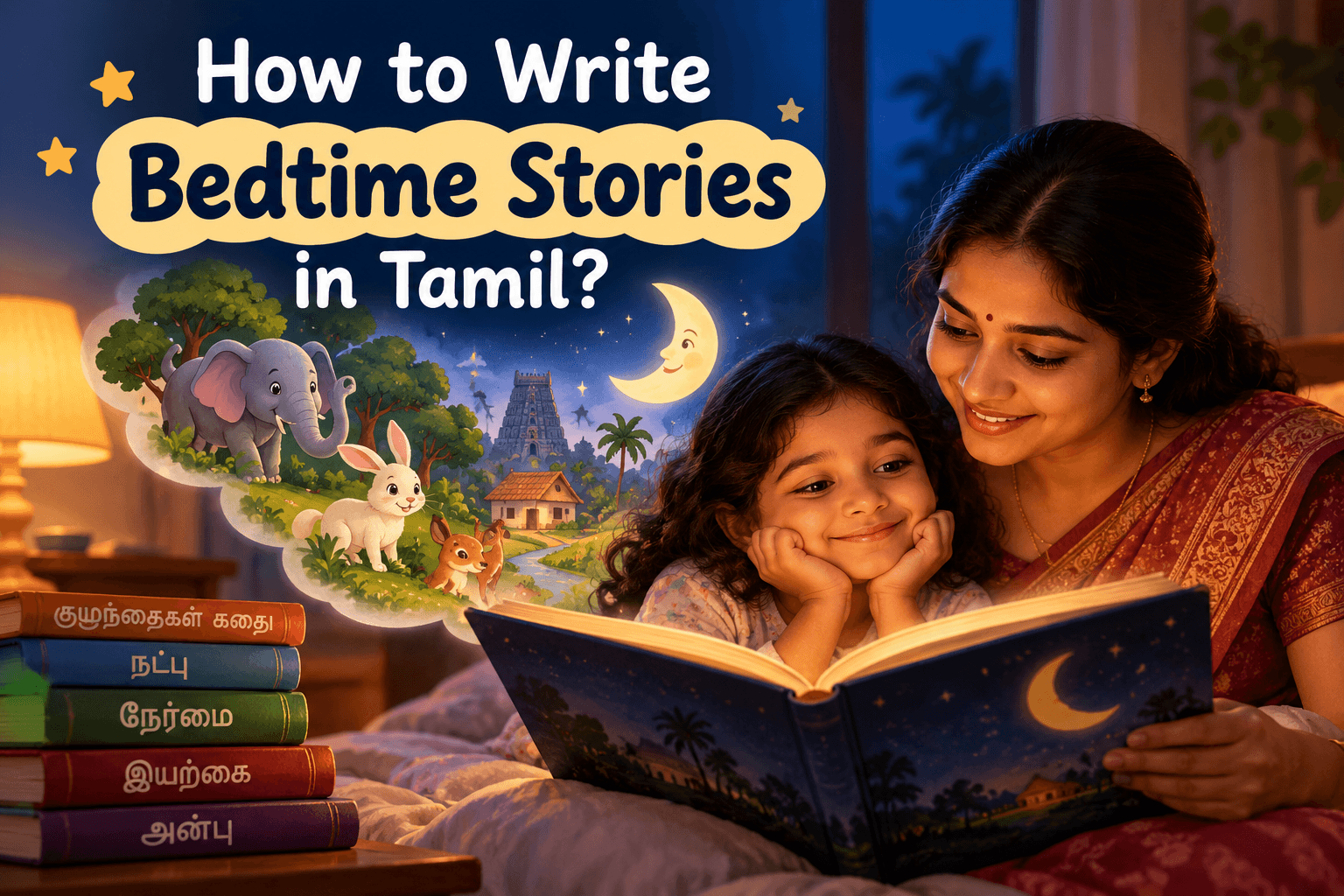

Bedtime stories are a wonderful way to help children relax, develop their imagination, and build a love for reading. Writing bedtime stories in Tamil makes this experience even more special by connecting children with their mother tongue, culture, traditions, and values.
If you are a parent, teacher, blogger, or aspiring children’s writer, learning how to write bedtime stories in Tamil can be both enjoyable and rewarding. In this guide, we will explore simple steps, creative ideas, and helpful tips for writing engaging Tamil bedtime stories for children.
1. Choose a Simple and Interesting Story Idea
The first step in writing a bedtime story is choosing an idea that children can easily understand. Young children enjoy stories about animals, magical forests, friendly characters, family relationships, and everyday adventures.
Here are some popular Tamil bedtime story ideas:
- Animal stories: A clever rabbit, a kind elephant, or a friendly squirrel.
- Moral stories: Tales that teach honesty, kindness, patience, and sharing.
- Fantasy stories: Magical stars, talking trees, and friendly fairies.
- Village stories: Beautiful stories inspired by Tamil village life and nature.
- Family stories: Heartwarming adventures involving grandparents, parents, and children.
Choose one central idea and build your story around it. Keeping the plot simple helps children follow the story without becoming overwhelmed before bedtime.
2. Write in Simple and Natural Tamil
When writing bedtime stories in Tamil, use words that match your child’s age and understanding. Short sentences, familiar expressions, and natural conversations make the story easier to follow.
For example, instead of using complicated literary Tamil, you can write:
“ஒரு அழகான கிராமத்தில் நிலா என்ற குட்டிப் பெண் வாழ்ந்து வந்தாள்.”
This means, “A little girl named Nila lived in a beautiful village.”
Simple Tamil makes stories accessible to young children while helping them learn new words naturally. You can also include gentle, familiar phrases such as “ஒரு ஊரில் ஒரு ராஜா இருந்தார்” to create a traditional storytelling atmosphere.
3. Create Lovable Characters
Every good bedtime story needs a character that children can connect with. Your main character could be a curious child, a playful kitten, a brave little rabbit, or a friendly moon.
Give your character one or two memorable qualities. For example:
- A rabbit who always helps its friends.
- A little girl who loves exploring nature.
- A baby elephant who learns to share.
- A star that wants to make a lonely child smile.
Children often enjoy stories in which the main character experiences feelings they recognize, such as happiness, fear, excitement, or sadness. These emotions make the story more relatable and meaningful.
4. Follow a Simple Story Structure
A clear beginning, middle, and ending will help you write a complete bedtime story.
Beginning: Introduce the main character and the setting.
Middle: Present a small problem or adventure that keeps the child interested.
Ending: Resolve the problem peacefully and finish with a comforting message.
For example, a story about a little rabbit who loses its way in a forest could begin with its playful adventure, continue with its search for home, and end when its animal friends help it return safely.
For bedtime stories, avoid overly frightening scenes, complicated conflicts, or intense cliffhangers. A calm and reassuring ending helps children settle down for sleep.
5. Include a Gentle Moral or Positive Message
Tamil children’s stories often include valuable lessons about good behavior, relationships, and kindness. You can incorporate these ideas naturally without making the story sound like a lecture.
Popular moral themes include:
- அன்பு (Love)
- நட்பு (Friendship)
- நேர்மை (Honesty)
- இரக்கம் (Compassion)
- பகிர்ந்து கொடுத்தல் (Sharing)
- இயற்கையைப் பாதுகாத்தல் (Protecting nature)
For example, a story about a small bird sharing its food with another bird can teach children the importance of generosity.
Remember that the lesson should emerge from the characters’ actions rather than from a long explanation at the end.
6. Add Imagination and Sensory Details
Children love imagining the world they hear about. Use gentle descriptions of sounds, colors, places, and feelings to make your story come alive.
You might describe:
- The silver moon shining in the night sky.
- Crickets singing softly in a green garden.
- A little rabbit hopping through a flower-filled meadow.
- A cool breeze moving the leaves of a banyan tree.
- Stars twinkling above a quiet Tamil village.
For example:
“நிலா வானத்தில் அழகாகச் சிரித்தது. மரங்களின் இலைகள் மெதுவாக அசைந்தன. குட்டிக் குருவி தன் கூட்டில் கண்களை மூடி உறங்கத் தொடங்கியது.”
These gentle images create a peaceful atmosphere that suits bedtime storytelling.
7. Use Repetition and Dialogue
Repetition makes stories memorable and encourages children to participate. You can repeat a familiar phrase throughout the story, such as “நண்பர்களுக்கு உதவுவது நல்லது” or use a playful sound like “டப்… டப்… டப்…” when a little elephant walks.
Simple dialogue also helps bring characters to life.
For example:
“நிலா, நீ ஏன் கவலையாக இருக்கிறாய்?” என்று முயல் கேட்டது.
“என் வீட்டிற்குச் செல்லும் வழி தெரியவில்லை,” என்று நிலா சொன்னாள்.
Short conversations make the story feel natural and help children understand what each character is experiencing.
8. Make the Ending Calm and Comforting
The ending is especially important in a bedtime story. After the adventure is over, allow the characters to feel safe, happy, and ready to rest.
You could end with a child sleeping beside a favorite toy, a family watching the moon together, or a little bird settling into its nest.
A gentle Tamil ending might be:
“நிலா மெதுவாகக் கண்களை மூடினாள். வெளியே வானத்தில் நட்சத்திரங்கள் மின்னின. அந்த அழகான இரவில் அவள் இனிமையான கனவுகளுடன் உறங்கினாள்.”
Such endings give children a sense of comfort and closure.
9. Example of a Short Tamil Bedtime Story
குட்டி முயலும் நிலவும்
ஒரு அழகான காட்டில் பட்டு என்ற குட்டி முயல் வாழ்ந்து வந்தது. அதற்கு இரவில் வானத்தில் மின்னும் நட்சத்திரங்களைப் பார்ப்பது மிகவும் பிடிக்கும்.
ஒரு நாள் இரவு, பட்டு தன் வீட்டின் அருகில் அமர்ந்து நிலவைப் பார்த்துக் கொண்டிருந்தது.
“நிலவே, நீ ஏன் ஒவ்வொரு இரவும் எங்களுடன் இருக்கிறாய்?” என்று பட்டு கேட்டது.
நிலா மெதுவாகச் சிரித்தது.
“இரவு நேரத்தில் உலகிற்கு அழகையும் அமைதியையும் தரவே நான் வானத்தில் ஒளிர்கிறேன்,” என்று நிலா சொன்னது.
அப்போது அருகிலிருந்த ஒரு சிறிய பறவை குளிரில் நடுங்கிக் கொண்டிருந்தது. அதைப் பார்த்த பட்டு, தன் வீட்டிலிருந்து ஒரு மென்மையான இலையைக் கொண்டு வந்து பறவைக்கு அருகில் வைத்தது.
“நன்றி, பட்டு! நீ மிகவும் அன்பான நண்பன்,” என்று பறவை மகிழ்ச்சியுடன் சொன்னது.
அதைப் பார்த்த நிலா இன்னும் அழகாக ஒளிர்ந்தது.
சிறிது நேரத்தில் பட்டு தன் வீட்டிற்குச் சென்றது. பறவையும் தன் கூட்டில் அமைதியாக உறங்கியது. நிலா வானத்தில் ஒளிர, காடு முழுவதும் அமைதியாக இருந்தது.
அன்று இரவு பட்டு ஒரு இனிமையான கனவு கண்டது.
கதையின் நீதி: பிறரிடம் அன்பாக இருப்பதும், தேவையான நேரத்தில் உதவுவதும் மகிழ்ச்சியைத் தரும்.
10. Tips for Writing Bedtime Stories for Different Ages
The best story length and language depend on the child’s age and attention span.
- Ages 2–4: Use very short stories, familiar objects, repeated phrases, and simple actions.
- Ages 4–6: Include friendly animal characters, small adventures, and clear moral lessons.
- Ages 6–8: Introduce more detailed plots, imaginative worlds, and simple challenges that characters solve.
- Ages 8 and above: Explore longer adventures, meaningful friendships, courage, responsibility, and cultural traditions.
These are general guidelines rather than strict age limits. Adjust the language and story length according to the child’s interests and reading ability.
11. Read the Story Aloud and Edit It
Once you have written your Tamil bedtime story, read it aloud as if you were telling it to a child. This helps you identify sentences that are too long, unfamiliar words, and dialogue that sounds unnatural.
Before finishing your story, ask yourself:
- Is the Tamil simple and easy to understand?
- Is the main character interesting and relatable?
- Does the story have a clear beginning, middle, and end?
- Is the message positive and age-appropriate?
- Does the ending create a peaceful feeling?
- Is the story free from unnecessary frightening scenes?
You can also ask a child to listen to the story and notice which parts capture their attention. Their reactions can help you improve future stories.
Conclusion
Writing bedtime stories in Tamil is a beautiful way to combine creativity, language learning, imagination, and family bonding. Start with a simple idea, create lovable characters, use natural Tamil, include a gentle message, and end with a peaceful moment.
You do not need complicated words or a long plot to write a memorable story. Even a short tale about a little bird, a kind rabbit, or a magical moon can become a treasured bedtime memory.
With regular practice, you can create original Tamil bedtime stories that children enjoy listening to and remember long after the story ends.
Start writing today: Choose a character, imagine a small adventure, and give your story a warm and happy ending. Your next Tamil bedtime story could become your child’s favorite nighttime tradition.

